SCOLIOSIS
Scoliosis is a lateral curvature of the spine that can appear in childhood or develop gradually in adulthood. At Dr. Verbitskiy in Maribor we offer supportive manual treatment to relieve pain and improve the muscle balance associated with scoliosis.
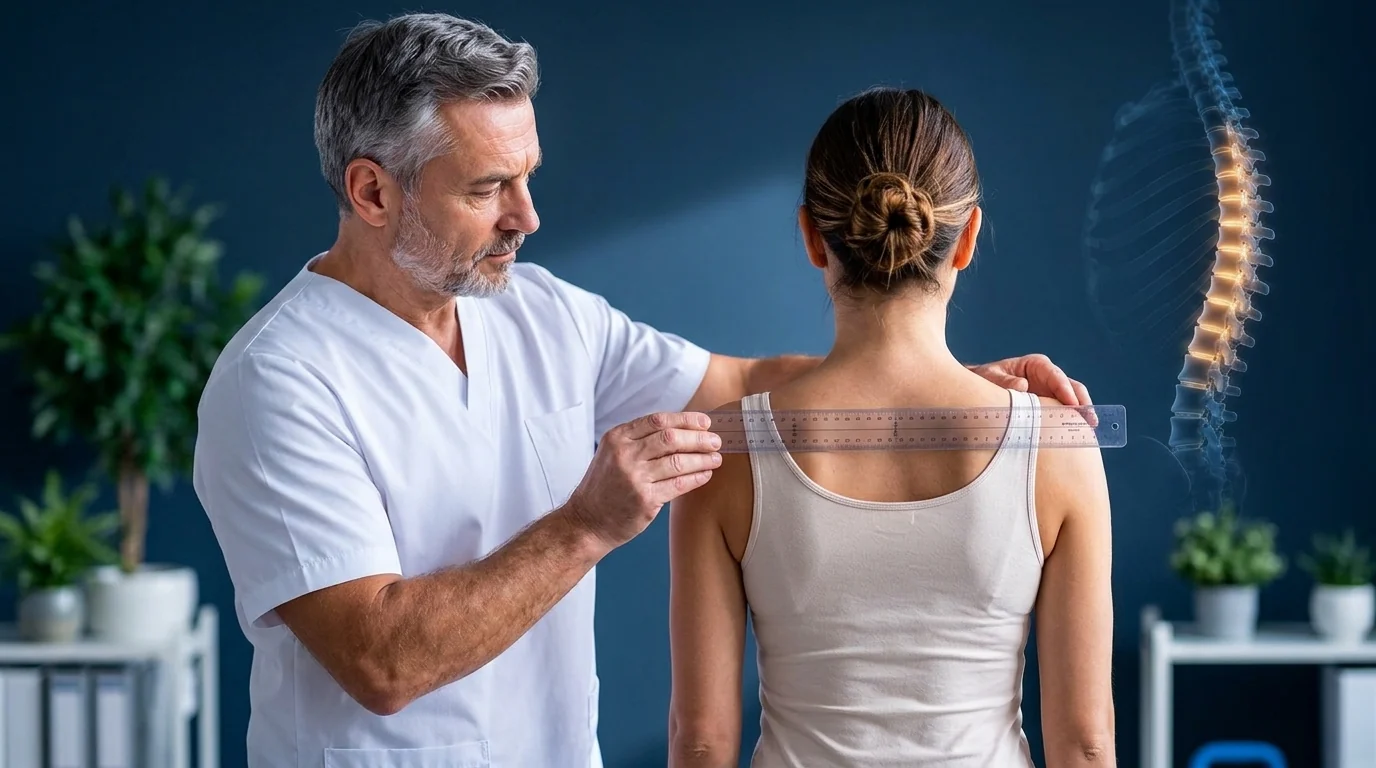
Scoliosis is a condition in which the spine, instead of a straight line, curves into an S or C shape. It most commonly occurs in children and adolescents during growth (idiopathic scoliosis), but can also develop in adults due to degenerative spinal changes. It is important to know that manual therapy for scoliosis does not 'fix' or straighten structural spinal curvatures — but it can significantly help reduce pain, release muscle imbalance, and improve posture.
Why scoliosis occurs
The cause of scoliosis depends on the type and the age at which it occurs:
- 🔹 Idiopathic scoliosis - the most common form in adolescents; the cause is not precisely known
- 🔹 Congenital scoliosis due to abnormalities in vertebral development
- 🔹 Neuromuscular scoliosis, associated with neurological or muscular conditions
- 🔹 Degenerative scoliosis in adults due to wear of intervertebral discs and joints
- 🔹 Muscle imbalance that can accentuate an existing mild curvature
How to recognise scoliosis
Signs of scoliosis are often visible when observing posture and body symmetry:
- 🔹 Uneven shoulder or scapula height
- 🔹 One side of the waist appears more pronounced than the other
- 🔹 Leaning of the body to one side when standing
- 🔹 Uneven hip height
- 🔹 Back pain in adults with degenerative scoliosis
- 🔹 Visible spinal curvature when bending forward
How we provide supportive treatment for scoliosis
The aim of manual treatment in scoliosis is to reduce pain, release muscle imbalance around the spine, and support the best possible posture — always as a complement, not a replacement, to specialist orthopaedic care and follow-up.
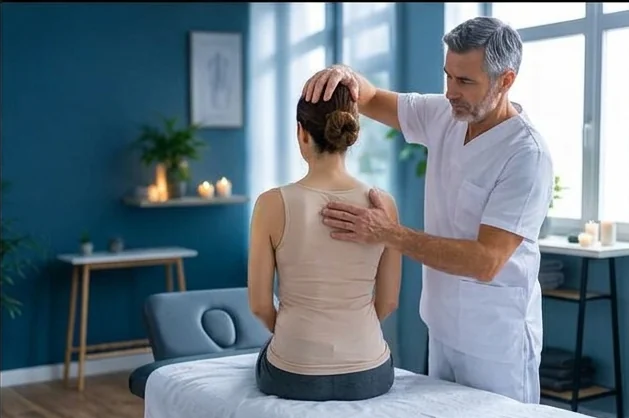
1. Posture assessment
Accurate assessment of body symmetry, muscle imbalance and spinal range of motion.
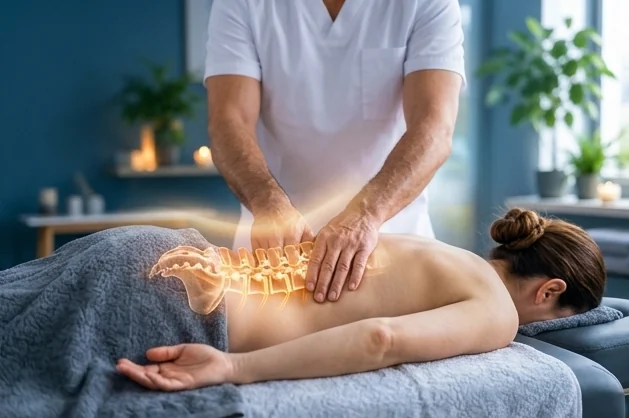
2. Supportive treatment
Release of tense muscles on the convex side of the curvature and support for weaker muscles.
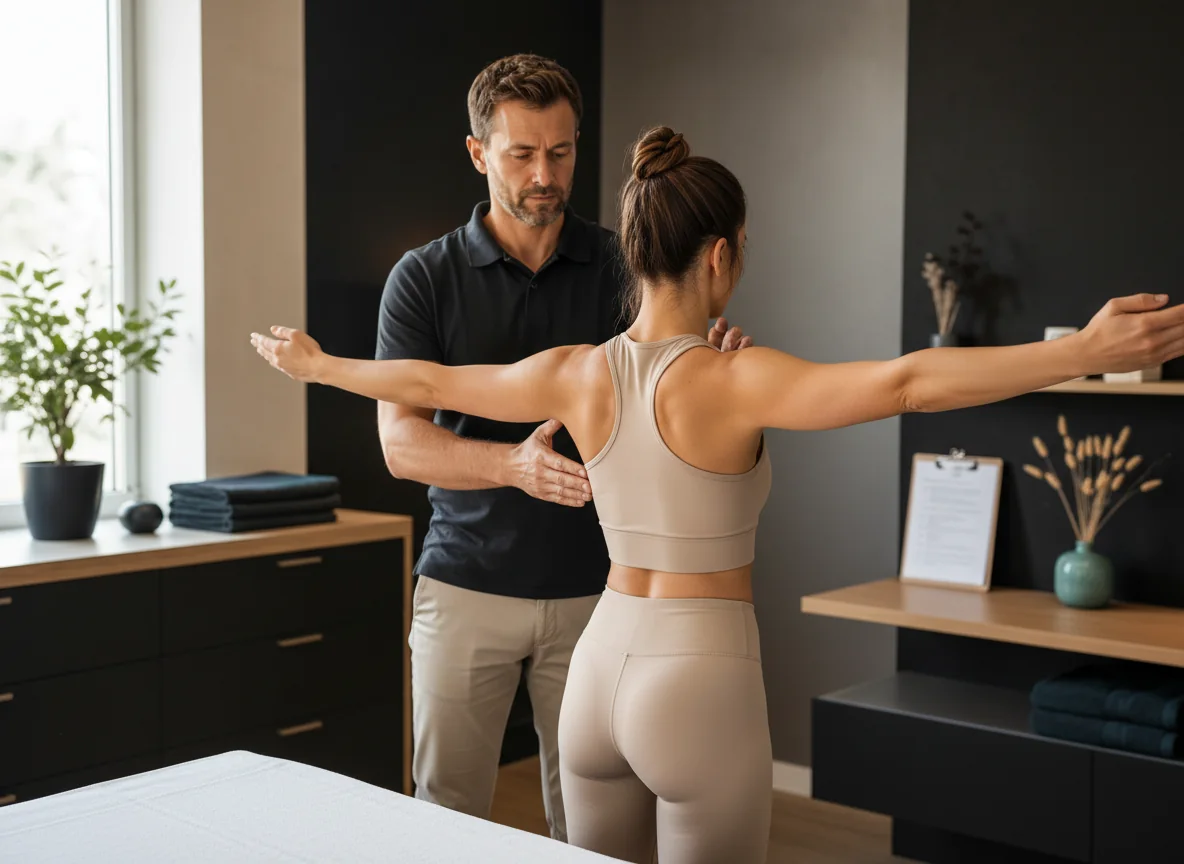
3. Postural exercises
Recommendations for exercises that support body symmetry and reduce progression of imbalance.
Spinal curvature we help with
People most often come to us with these problems:
- 🔹 Visible curvature of the spine or one shoulder higher
- 🔹 Back pain in adults with scoliosis
- 🔹 Muscle tension on one side of the back
- 🔹 Poor posture and back fatigue during the day
- 🔹 Limited spinal mobility
- 🔹 Support alongside exercises and regular monitoring
Signs that require immediate attention
Scoliosis in children and adolescents requires regular monitoring by an orthopaedic specialist, as it can progress rapidly during growth - in some cases a brace or even surgery is needed. Seek medical help immediately if you notice rapid progression of the curve, breathing difficulties, or significant new pain. Manual therapy with Dr. Verbitskiy is always an adjunct, never a substitute for specialist scoliosis follow-up.
What our patients say
Verbitskiy, Manualna terapija - Osteopatija, diagnostika, rehabilitacija, d.o.o. · Maribor
Watch videos about manual therapy and osteopathy on our YouTube channel.
Visit YouTube channel →Spinal curvature: backward, forward and sideways
When people search for “spinal curvature”, they may have several different conditions in mind.
Increased backward curvature (kyphosis)
With increased curvature of the upper spine backward, the posture becomes more stooped, often with tension in the neck and between the shoulder blades. Muscle imbalance and desk work make it more pronounced.
Forward curvature (lordosis)
An increased arch in the lower back is often linked to tight muscles in the lower back and hips and pain in the lower back.
Sideways curvature (scoliosis)
In scoliosis the spine curves sideways and may also be rotated. In children and adolescents, monitoring by a doctor is important; in adults and older people, pain from muscle imbalance is common.
What manual treatment can do
Manual therapy does not correct a structural curvature. It can, however, help with pain, muscle tension, mobility and posture. We adapt the treatment to your condition and recommend a medical check-up where needed.
Frequently asked questions about scoliosis
What does increased backward curvature of the spine mean?
Most often it is increased kyphosis, with a stooped posture and tension in the neck and between the shoulder blades. A doctor makes the exact assessment; manual treatment can help with tension and mobility.
Does manual therapy correct a curved spine?
It does not correct a structural curvature, but it can reduce pain and tension and improve mobility and posture.
Is scoliosis dangerous in older people?
It is common in older people and often linked to wear-and-tear changes. Pain can be eased with gentle treatment; for new or rapidly progressing problems, see a doctor.
Can manual therapy cure scoliosis?
No, manual therapy cannot correct structural curvature of the spine. It can, however, significantly help reduce pain and improve muscular balance in scoliosis.
Does scoliosis always require surgery?
No, most cases of mild to moderate scoliosis are managed conservatively - by observation, exercise, or a brace. Surgery is required only for severe, progressive curves.
How often should a child with scoliosis see a specialist?
This is determined by the treating orthopaedic specialist, often every 6–12 months during growth, depending on the degree of curvature.
Does scoliosis cause pain in adults?
Degenerative scoliosis in adults is often associated with pain from joint wear and muscular imbalance, which manual therapy can help relieve.
Are exercises safe for scoliosis?
Yes, targeted exercises are often recommended and helpful, but they should be performed according to a specialist's instructions, tailored to your curvature.
Do you also treat children with scoliosis?
We offer supportive manual treatment to adolescents as well, always in collaboration with their orthopaedic specialist.
Contact us
Get in touch with any questions or to book an appointment.
Please bring one large towel with you to your appointment.
Please confirm your appointment by phone or WhatsApp one hour beforehand, or two hours beforehand if you are travelling a long way. This way you avoid a wasted trip if an appointment has to be rescheduled at short notice.