CRANIOSACRAL
THERAPY
Craniosacral therapy is a gentle complementary treatment that uses calming touch to support relaxation of the body and nervous system. It proceeds slowly and always within your own boundaries.
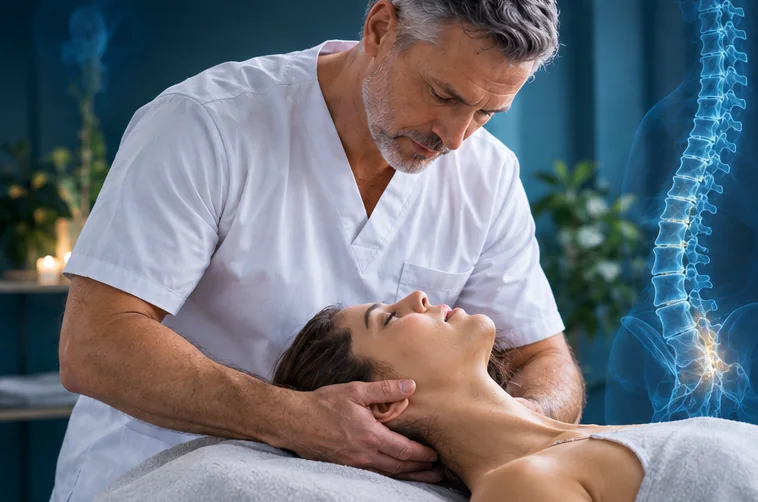
What the treatment can offer you
Tension relief
The gentle treatment helps release muscle tension in the neck, shoulders and head.
Deep relaxation
The calm setting and slow pace of the treatment support deep physical and mental relaxation.
Support for tension headaches
The treatment is often chosen as complementary support for headaches linked to muscle tension.
Calmer sleep
A relaxed body finds its way more easily to calmer, deeper sleep.
Less stress
Gentle touch and a calm setting help the body shift from a stress response into a relaxed state.
Time to settle and reconnect with the body
In craniosacral therapy, the therapist uses gentle touch and carefully observes the body's response. The treatment proceeds slowly, in silence or with conversation, always respecting your boundaries and how you feel at the time. This therapy is also known as craniosacral osteopathy.
Deep relaxation
A calm setting and gentle touch create space in which the body can settle.
Body awareness
Attention is directed to breathing, sensations and bodily signals, without pressure to achieve a result.
Individual pace
Each session is adapted to your needs, sensitivity and reason for the visit.
Who craniosacral therapy is suitable for
The treatment is often chosen as complementary support for the following sensations and situations:
- 🔹 A feeling of chronic tension in the neck, shoulders or head
- 🔹 Difficulty settling down before sleep linked to bodily tension
- 🔹 General overload and prolonged stress
- 🔹 A feeling of inner restlessness or an overloaded nervous system
- 🔹 Periods of increased psychological pressure
- 🔹 A wish for deep relaxation and a calmer body
- 🔹 Tension-type headache linked to muscle tightness in the neck and shoulders
- 🔹 A general decline in energy and reduced capacity for daily tasks
- 🔹 A wish to release muscle tension after prolonged physical or psychological strain
- 🔹 Restless sleep or difficulty falling asleep without a clear reason
- 🔹 A feeling of unease or inner restlessness without a clear reason
- 🔹 Tension linked to prolonged sitting or computer work
How craniosacral therapy works
1. Initial conversation
You explain what brought you to therapy, and the therapist outlines the process and answers your questions.
2. Calm treatment
You lie clothed on the therapy table. The touch is gentle, and the session follows your pace.
3. Integration and recommendations
After the session we take time to talk about how you feel and offer simple recommendations for the rest of the day.
What you can expect
Many visitors describe a feeling of calm and greater body awareness. The experience is personal and may vary from session to session; the therapy does not guarantee a specific health outcome.
Important
For acute, severe or unexplained symptoms, please seek medical help.
Problems patients come to craniosacral therapy with
People most often come to us with these problems:
- 🔹 Tinnitus and ringing in the ears
- 🔹 Headache and tension at the back of the head
- 🔹 Tension in the neck and shoulders
- 🔹 Sleep problems and a feeling of inner tension
- 🔹 Stress and a feeling of exhaustion
- 🔹 Problems after a head or neck injury, once the acute phase has passed
Frequently asked questions — Craniosacral therapy
Is the treatment painful?
Who is the treatment for?
How often is a session recommended?
Let us discuss your needs
Please bring one large towel with you to your appointment.
Please confirm your appointment by phone or WhatsApp one hour beforehand, or two hours beforehand if you are travelling a long way. This way you avoid a wasted trip if an appointment has to be rescheduled at short notice.