PAIN
IN THE LOW BACK
Low back pain is one of the most common reasons patients see Dr. Sergej Verbitskiy in Maribor. With precise diagnosis and targeted manual therapy we identify the cause of the pain, not just relieve the symptoms.
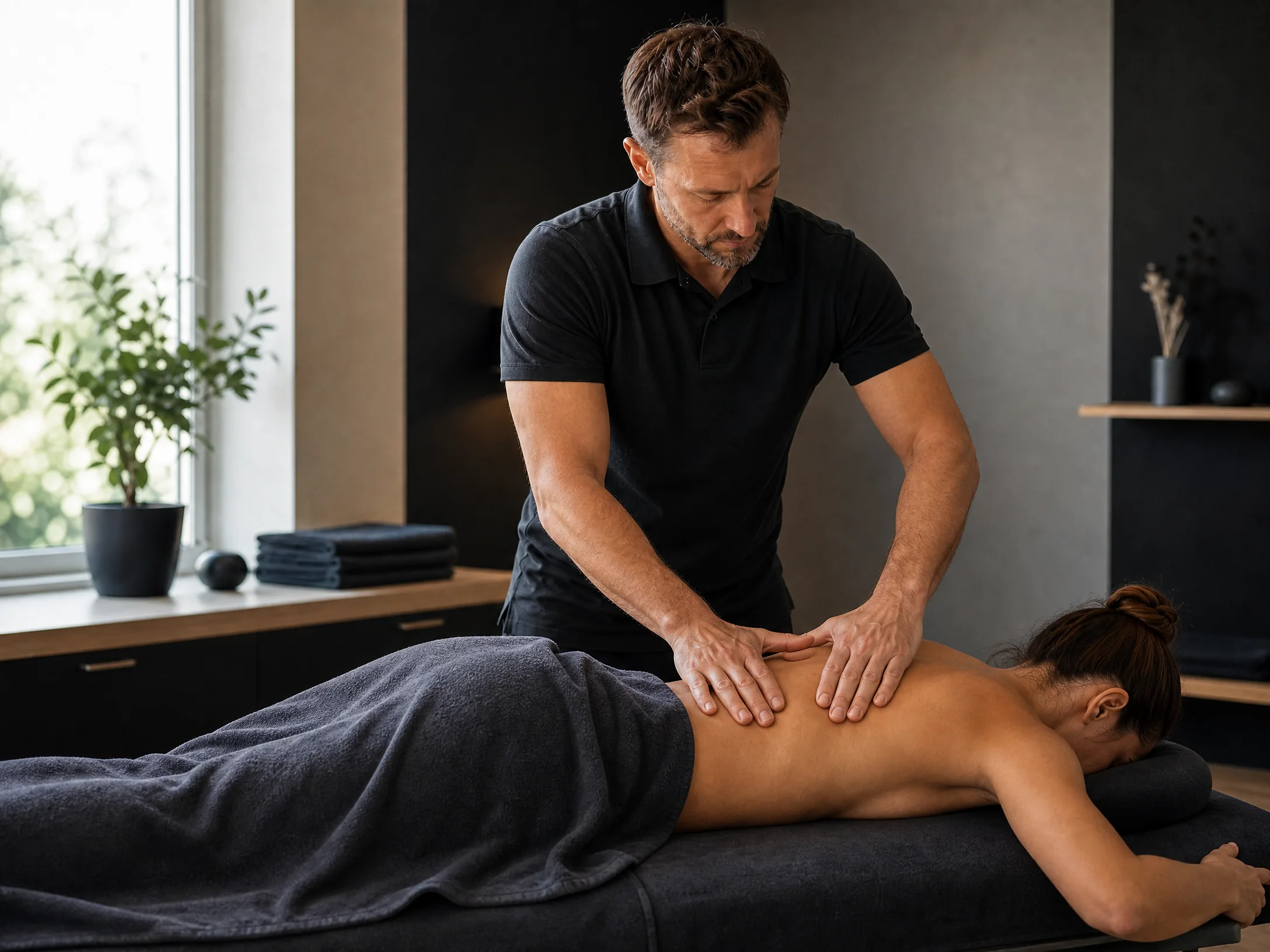
Almost every adult experiences low back pain at least once in their life — whether due to prolonged sitting, an awkward movement, or gradual buildup of muscle tension. At Dr. Verbitskiy's practice in Maribor we treat many patients each year, from mild occasional pain to long-standing chronic conditions that interfere with daily life.
Why low back pain occurs
Pain in the lumbar spine rarely stems from a single cause — it is usually a combination of prolonged strain and a triggering event. The most common causes we observe in patients are:
- 🔹 Prolonged sitting at a computer at work or while driving
- 🔹 Incorrect lifting technique or sudden jerking movements
- 🔹 Weak deep abdominal and back muscles that do not adequately support the spine
- 🔹 Degenerative changes of the intervertebral discs due to aging
- 🔹 Excess body weight that further loads the lumbar spine
- 🔹 Prolonged stress manifesting as chronic muscle tension in the low back
How low back pain presents
Low back pain can present in different ways depending on the cause and duration. Recognising the pain pattern helps us choose the right treatment.
- 🔹 Dull, constant pain that worsens after prolonged sitting or standing
- 🔹 Sharp pain when bending, twisting or standing up
- 🔹 Morning stiffness that gradually improves during the day
- 🔹 Feeling of a muscle cramp or 'block' in the lumbar region
- 🔹 Pain that spreads toward the buttock but does not radiate into the leg
- 🔹 Worsening of pain when coughing or sneezing
How we treat low back pain
Treatment with Dr. Verbitskiy always begins with a precise assessment, since the same pain can arise from entirely different causes. Based on the findings we select a combination of manual techniques that best suit your condition.
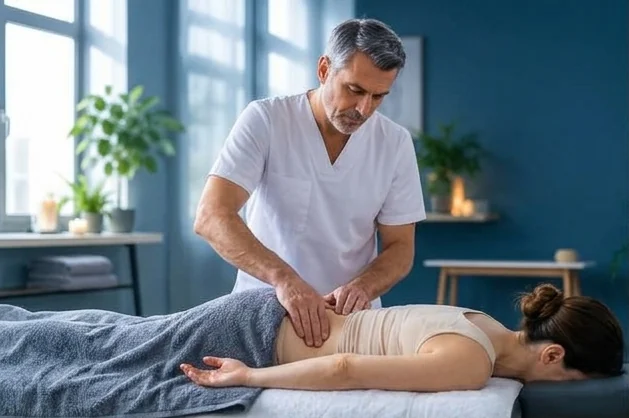
1. Assessment and diagnosis
Discussion of pain onset, clinical examination of posture and lumbar mobility.
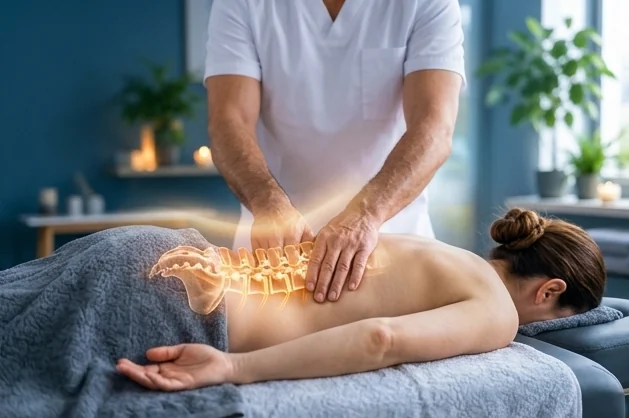
2. Manual therapy
Targeted manual techniques to release muscle tension and restrictions in the lumbar area.
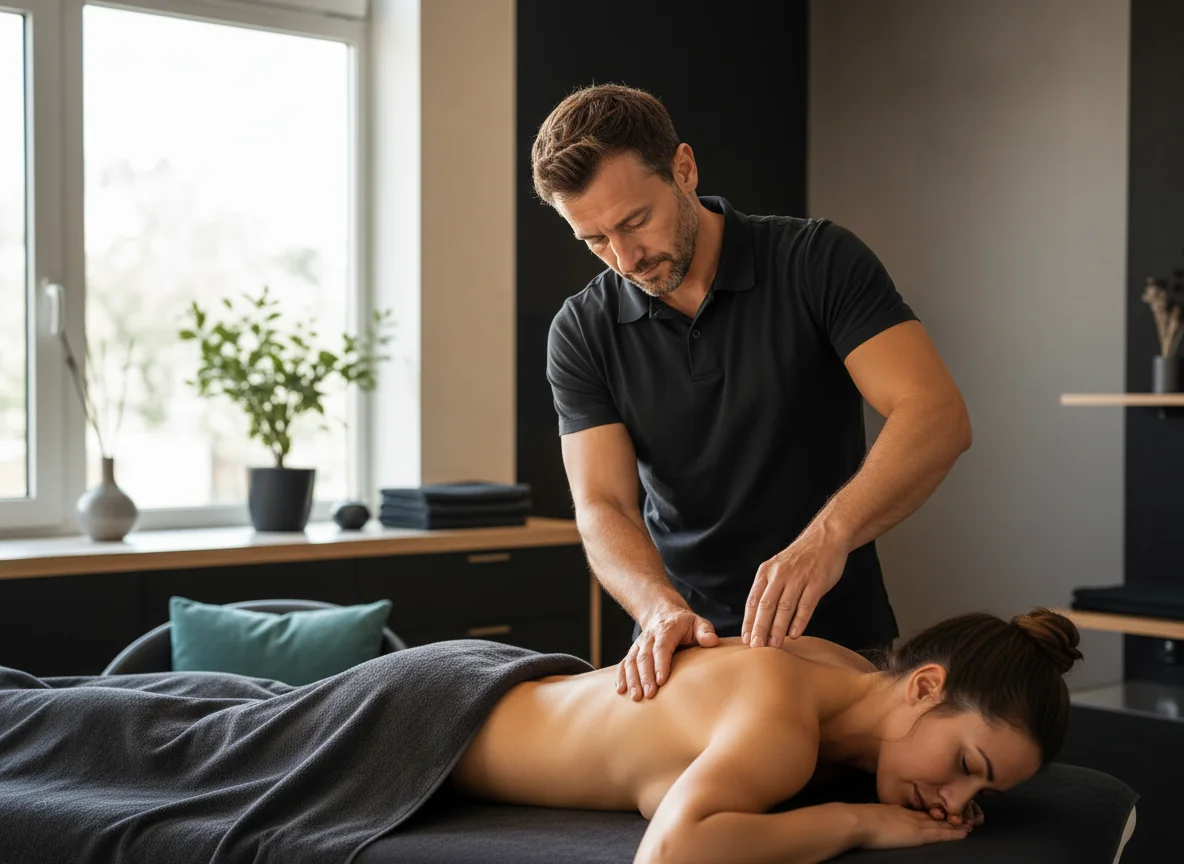
3. Recommendations for daily life
Advice on posture, movement and prevention of pain recurrence.
Lower back pain we help with
People most often come to us with these problems:
- 🔹 Sudden sharp pain after lifting or an awkward movement (lumbago)
- 🔹 Lower back pain after long sitting or computer work
- 🔹 Morning stiffness and pain when getting up
- 🔹 Pain that radiates to the buttock or leg
- 🔹 Pain when bending, twisting and lifting
- 🔹 Recurring lower back pain that keeps coming back
Signs that require immediate attention
In rare cases low back pain may be a sign of a more serious condition that requires immediate medical assessment. Seek medical help right away if you notice sudden severe pain after an injury, loss of bladder or bowel control, fever, unexplained weight loss, or progressive weakness or numbness/tingling in both legs. In such cases manual therapy is not the appropriate first step — urgent medical evaluation is required.
What our patients say
Verbitskiy, Manualna terapija - Osteopatija, diagnostika, rehabilitacija, d.o.o. · Maribor
Watch videos about manual therapy and osteopathy on our YouTube channel.
Visit YouTube channel →Lumbar spine and chronic low back pain
Chronic low back pain
We speak of chronic pain when it lasts for several weeks or keeps returning. It is often maintained by muscle tension, limited mobility and a sedentary lifestyle.
Lumbago in the lower back
Lumbago is a sudden, sharp pain in the lower back that limits movement, often after lifting or an awkward movement. It is usually linked to an acute muscle spasm and joint blockage.
Degenerative changes of the lumbar spine
Over the years the discs and joints of the lumbar spine wear down. Changes seen on a scan do not necessarily mean pain. Manual treatment focuses on mobility and reducing tension.
Frequently asked questions about back pain
What helps with chronic low back pain?
Regular movement, adjusting how you work and gentle manual treatment for muscle relaxation and mobility help.
What are degenerative changes of the lumbar spine?
These are wear-and-tear changes of the discs and joints that are common with age. They do not necessarily mean pain. Treatment focuses on mobility and tension, not on removing the changes seen on a scan.
How long does it take for back pain to go away?
Mild, acute pain often subsides within a few days to two weeks, while chronic problems may require several weeks of targeted treatment.
Should I rest when I have back pain?
Complete rest for more than a day or two is usually not recommended — cautious movement and targeted treatment often speed recovery more than total rest.
Is back pain always a sign of a herniated disc?
No, most back pain comes from muscles, joints, or ligaments and is not related to a herniated disc. A thorough assessment during examination will reveal the likely cause.
Can I help myself with exercises at home?
Gentle stretching and stabilisation exercises can help, but we recommend aligning them with our guidance after assessment, as incorrect exercises may worsen the condition.
When should I book an appointment?
If the pain lasts more than a few days, recurs, or limits daily activities, it is sensible to have an exam as soon as possible.
Is manual therapy painful?
Techniques are tailored to your tolerance and condition — the goal is relaxation, not additional pain.
Contact us
Get in touch with any questions or to book an appointment.
Please bring one large towel with you to your appointment.
Please confirm your appointment by phone or WhatsApp one hour beforehand, or two hours beforehand if you are travelling a long way. This way you avoid a wasted trip if an appointment has to be rescheduled at short notice.