OSTEOCHONDROSIS
Osteochondrosis is a common term for degenerative changes in the intervertebral discs and vertebrae. With Dr. Verbitskiy in Maribor, we use manual therapy to ease the tension and pain that often accompany these changes.
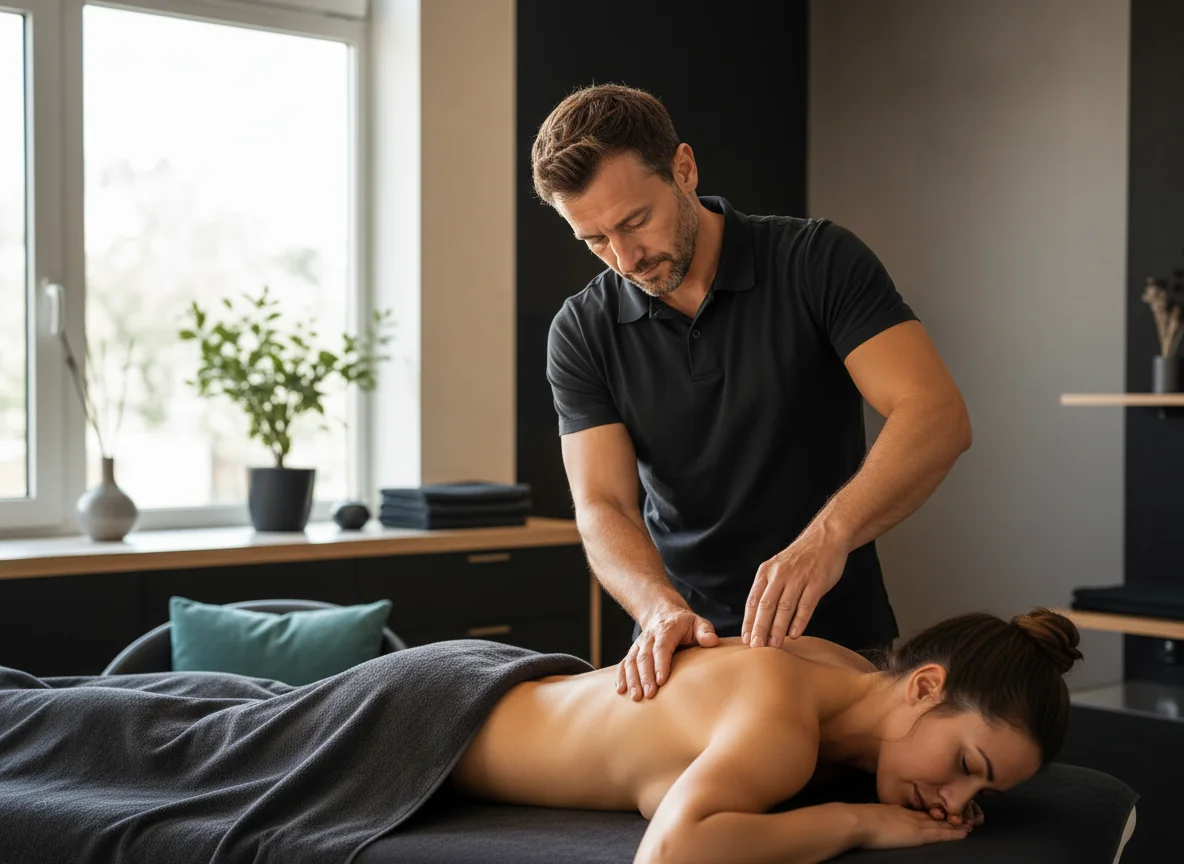
Osteochondrosis refers to wear of the intervertebral discs and adjacent vertebrae, which is very common with age and can occur in the cervical, thoracic or lumbar spine. The imaging finding alone does not say how much pain a person will have: many people with changes on a scan have no problems, while others feel marked tension and restricted mobility. We therefore do not treat the scan, but the problems you feel.
Why problems occur with osteochondrosis
The pain is most often caused by a combination of several factors:
- 🔹 Natural wear of discs and vertebrae over the years
- 🔹 Prolonged sitting and a monotonous posture at work
- 🔹 Overload of the spine during heavy physical work or lifting loads
- 🔹 Reduced mobility of individual segments and reflex tension of the surrounding muscles
- 🔹 Weakened trunk muscles that do not offload the spine enough
- 🔹 Previous spinal injuries or long-term overload
How problems with osteochondrosis present
Symptoms depend on the part of the spine, and often include:
- 🔹 Dull pain and fatigue in the back or neck that worsen after long sitting
- 🔹 Morning stiffness that eases after some movement
- 🔹 Restricted mobility when bending or turning
- 🔹 Tight, tender muscles beside the spine
- 🔹 Pain radiating into the arm or leg
- 🔹 Tingling or loss of strength (requires a medical assessment)
How we treat osteochondrosis
The aim is not to "fix the scan", but to reduce tension, improve mobility and show you how to offload the spine in everyday life.
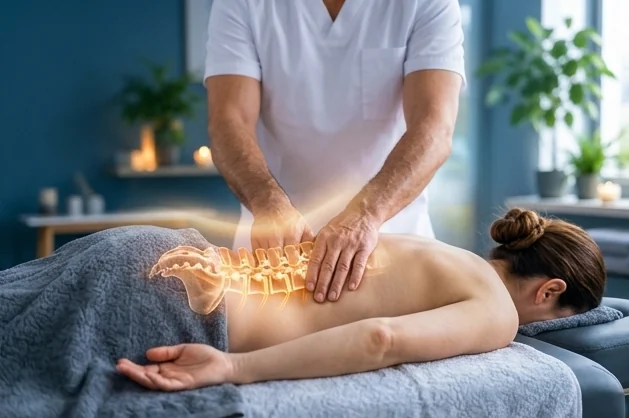
1. Assessment of condition
A conversation, examination of posture and spinal mobility, and an assessment of which structures are causing the problems.
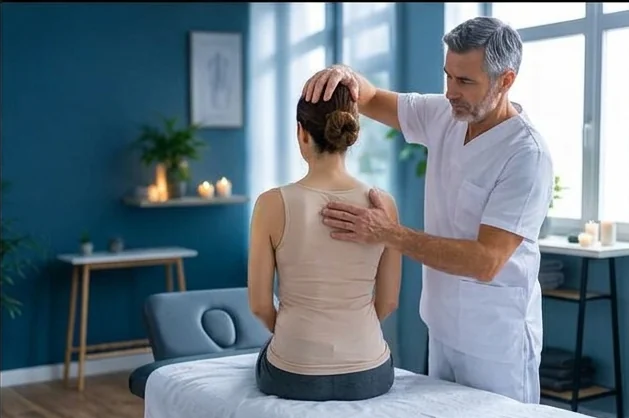
2. Manual therapy
Release of tight muscles and gentle improvement of mobility in the affected segments.
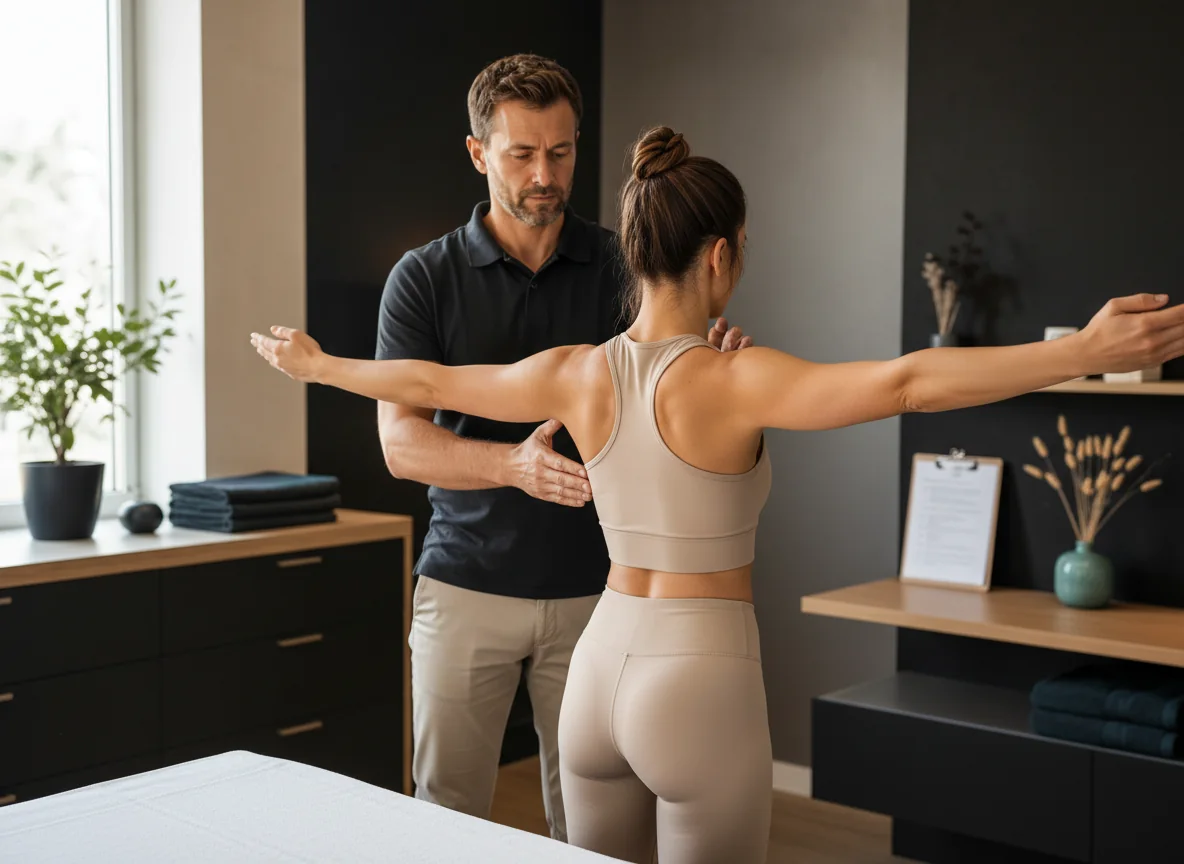
3. Exercises and guidance
Exercises to strengthen the trunk muscles, posture guidance and adjusting the workstation.
Osteochondrosis and spinal wear we help with
People most often come to us with these problems:
- 🔹 Pain and stiffness in the lower back or neck
- 🔹 Morning stiffness of the spine
- 🔹 Pain radiating into the arm or leg
- 🔹 Reduced mobility of the spine
- 🔹 Muscle tension with a worn spine
- 🔹 Recurring pain under load
Signs that require immediate attention
Seek medical help immediately if sudden weakness of a leg or arm, loss of sensation in the groin area, problems with bladder or bowel control, pain after an injury, or pain with fever and unintentional weight loss appear. These signs require an urgent medical assessment.
Wear of the spine is a normal part of ageing and cannot be removed. Manual therapy is a complement to medical care, not a replacement, but it can reduce tension and improve mobility. With radiating pain or weakness, a medical assessment is required.
What our patients say
Verbitskiy, Manualna terapija - Osteopatija, diagnostika, rehabilitacija, d.o.o. · Maribor
Watch videos about manual therapy and osteopathy on our YouTube channel.
Visit YouTube channel →Frequently asked questions about osteochondrosis
Is osteochondrosis a disease that has to be treated?
It involves degenerative changes that are common with age. We treat the problems they cause - pain, tension and restricted mobility - not just the picture on the scan.
Does manual therapy remove osteochondrosis?
It does not remove the wear. It can, however, reduce muscle tension, improve mobility and help with pain, so the problems often settle.
Do I need an MRI before I come?
Not necessarily. We carry out the examination without scans too; if you have them, bring them along. We suggest further tests when they make sense.
May I move if it hurts?
Gentle, regular movement that does not worsen the pain is usually suitable. You will receive specific guidance after the examination.
When is urgent help needed?
With weakness, loss of sensation, problems with bladder or bowel control, after an injury, or with pain accompanied by fever.
How many treatments do I need?
It depends on how long the problem has lasted and how extensive it is; many patients feel an improvement after the first visits, while chronic problems require a longer programme.
Contact us
Get in touch with any questions or to book an appointment.
Please bring one large towel with you to your appointment.
Please confirm your appointment by phone or WhatsApp one hour beforehand, or two hours beforehand if you are travelling a long way. This way you avoid a wasted trip if an appointment has to be rescheduled at short notice.